Biophilic Design Ideas for a Dining Room
Biophilic design ideas for a bare dining nook: live-edge oak, jute, trailing greenery, softened light. See it on your own room with RoomRefresh.ai.
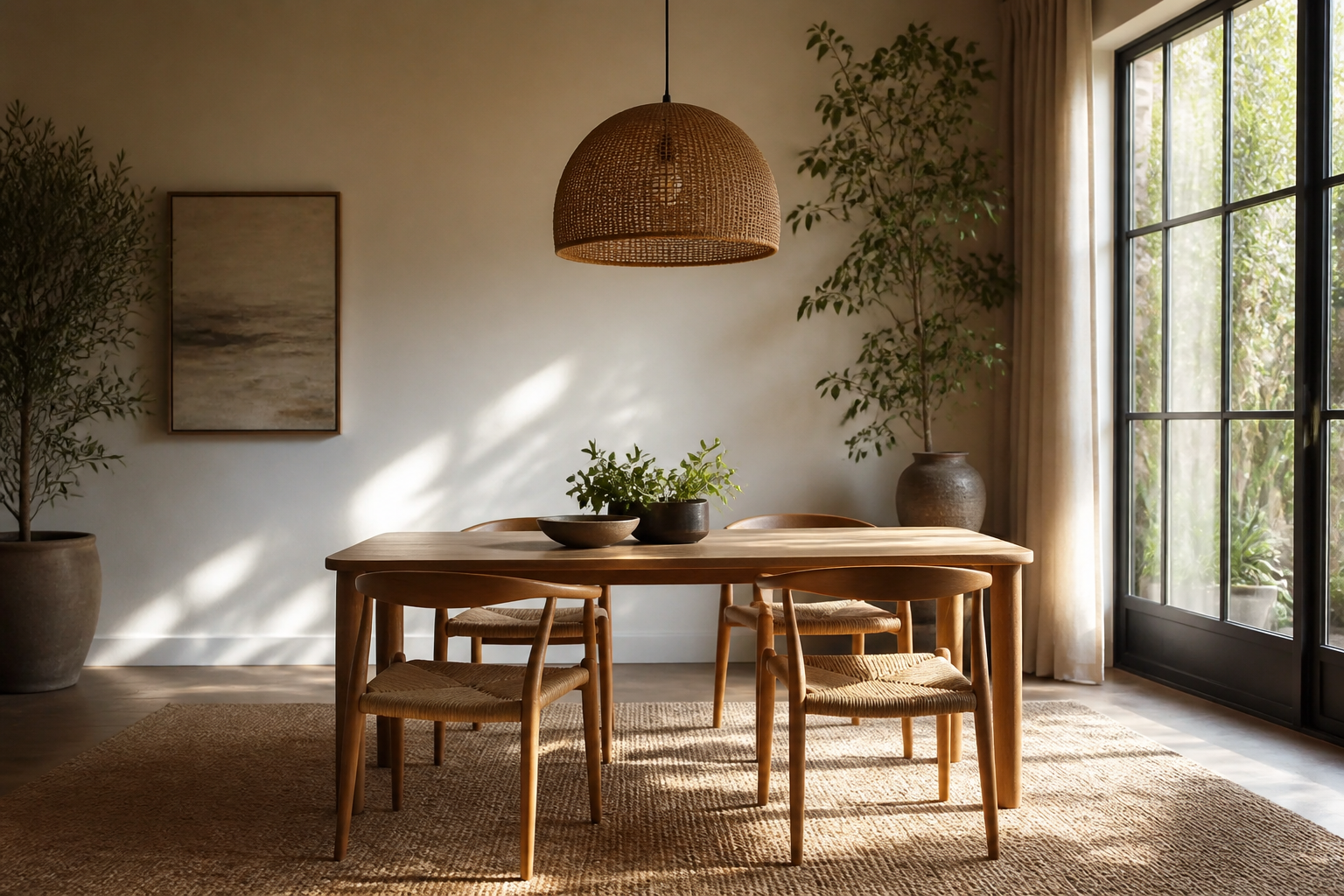
Biophilic Design Ideas for a Dining Room: Wood Grain, Jute, and Real Light
A dining nook usually has more unbroken wall and less furniture competing for space than almost any other room in a home — one table, a few chairs, maybe a sideboard. That makes it one of the easiest rooms to turn biophilic without a gut renovation, because there's so little already in the way. Biophilic design ideas for this kind of space come down to four concrete moves: real wood grain, a natural-fiber rug, layered greenery at the right height, and light that's softened rather than simulated. None of it requires knocking down a wall.
What Biophilic Actually Means at the Table
Biophilic design isn't a mood board of ferns. It's a set of material decisions that put your eye and hand in contact with something that grew or was shaped, not extruded. In a dining room that means the surfaces you touch most — tabletop, rug underfoot, the plant stand by the window — carry visible grain, weave, or leaf structure instead of a uniform factory finish.
Four Moves That Actually Read as Biophilic
1. A live-edge oak table. Leave the bark-side curve intact and let the grain show through a matte oil finish rather than a glossy polyurethane — the oil sinks into the wood instead of sitting on top of it, so the surface still feels like a tree rather than a laminate photo of one.
2. An undyed jute rug, not a dyed one. This is the detail most roundups skip: undyed jute doesn't leach color the way dyed sisal or a synthetic blend can. Spill red wine or olive oil near the table and it wipes off the surface instead of setting into the fiber, because there's no dye bath to bleed. Dyed natural fibers are more prone to staining precisely because the color was never permanent to begin with.
3. Trailing greenery, hung at the right height. A pothos or philodendron on a wall shelf works best when the vines are allowed to trail to roughly two-thirds of the distance down to the chair rail — high enough that no one's sightline across the table gets blocked, low enough that the leaves still catch window light instead of hanging in shadow above it.
4. Diffused, not blocked, light. A linen or unbleached cotton sheer over the window softens direct sun into the kind of even glow that makes wood grain and leaf texture actually visible, instead of either glaring off a bare pane or getting shut out by a heavy blackout curtain.
Comparing Your Material Options
| Element | Higher-maintenance option | Lower-maintenance, still biophilic |
|---|---|---|
| Rug | Wool (softer, but slower to dry if spilled on) | Undyed jute (wipes clean, doesn't hold moisture) |
| Table finish | Glossy polyurethane (durable, but hides grain) | Matte oil finish (shows grain, needs occasional re-oiling) |
| Window treatment | Bare glass (harsh direct glare at midday) | Linen sheer (diffuses light across the whole room) |
| Greenery | High-maintenance ferns (humidity-sensitive) | Pothos (tolerant, still reads as lush trailing greenery) |
See These Choices on Your Own Dining Nook Before You Buy Anything
It's one thing to read that a live-edge oak table and an undyed jute rug work together — it's another to know whether that combination actually looks right in your specific room, with your specific window and wall proportions. RoomRefresh.ai lets you upload a photo of your dining nook, pick a style — Biophilic is one of the twelve on offer — and get four photorealistic redesigns built on your actual room, walls, and window placement, so you can see how the plant and material choices would look in your space before spending on any of it. Each redesign comes with a shopping list linked to real products, so if the oak table and the pothos shelf work, you have a starting point to buy from rather than a mood board to chase down piece by piece.
The free tier gives you a limited number of renders to test the idea on your own room; the paid plan unlocks unlimited renders, high-res exports, and the full shopping list export if you want to take it further. Compare shopping-list features across AI room tools here if you want the full picture before you commit.
If you're curious how a related natural-material, low-clutter palette plays out in a different room, our Japandi living room guide walks through six anchor pieces for a calmer, wood-and-linen space — a useful contrast for seeing how the same materials shift with a different style.
Upload a photo of your dining nook to RoomRefresh.ai and try the Biophilic style free to see the oak table, the jute rug, and the trailing pothos rendered on your actual walls before you buy a single item.